Dean Wegner on Made in the USA
Dean Wegner shares how he’s rebuilding American manufacturing, creating U.S. jobs, and reshaping the future of patriotic, purpose-driven apparel.
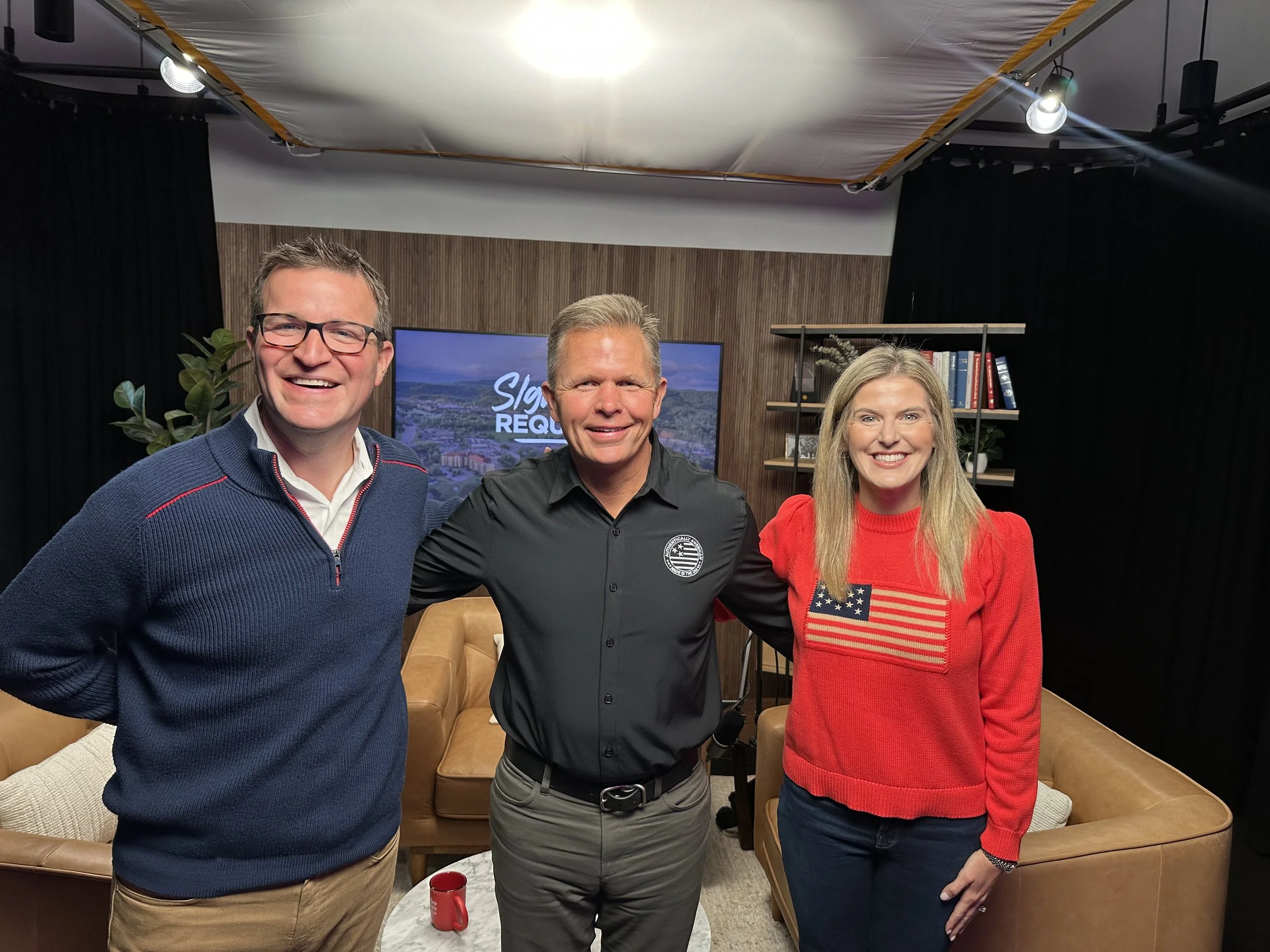
About Dean Wegner
Dean Wegner is the Founder and CEO of Authentically American®, a premium apparel brand committed to producing 100% American-made products. A West Point graduate and former Army Ranger, Wegner blends military discipline with corporate experience from Procter & Gamble and Mars to build a brand rooted in patriotism, quality, and purpose. He launched Authentically American in 2017 with a mission to revive U.S. manufacturing, support American workers, and donate 10% of profits to veteran and first responder charities. Under his leadership, the company has expanded manufacturing across 11 states, built partnerships with more than 1,000 organizations nationwide, and earned recognition as Tennessee’s 2024 Veteran-Owned Business of the Year.
About Authentically American
Founded in 2017, Authentically American is driven by a simple but ambitious goal: bring apparel manufacturing back to the United States. While less than 3% of U.S. apparel is currently made domestically (a steep decline from over 50% in the 1990s) the company is proving that American craftsmanship can compete on quality and values. Authentically American partners with businesses, nonprofits, and veteran-led organizations across all 50 states, offering premium tees, polos, and outerwear all made in U.S. factories. With manufacturing in 11 states, a growing national client base, and a commitment to donate 10% of profits to organizations like the Folded Flag Foundation and Reboot Recovery, the company is creating jobs, strengthening supply chains, and redefining what American-made can look like today.
Resources
Authentically American
Shop Authentically American
-
Spencer: Dean Wegner, founder and CEO of Authentically American, welcome to Signature Required.
Dean: honored to be a guest, and looking forward to a fantastic discussion. Thank you.
Spencer: Dean, you and I share in common not only being entrepreneurs, yes, being fathers of four kiddos, we're outnumbered in the household and all kinds of stuff that, uh, we have to talk about today. That's one of the reasons why am very much looking forward to this discussion as the more I read about you guys, just the alignment and values and who we are and what we stand for, and really our focus in life. Hmm.
Spencer: When I saw the brand title Authentically American and I didn't know anything else about it, I was like, you know, I could come up with like 50 different businesses that this could be, that all would kind of fit in some fun and creative ways.
Spencer: But why don't you tell us what authentically American is.
Dean: So Authentically American, we are an apparel brand, so think of us like a Nike, Land End, but instead of made in China, it's all made here in the U.S.
Carli: Oh, that's awesome.
Dean: Which, Carli to give you an idea how rare American made is I'm an Army veteran and when I graduated from West Point in 1993, over 50% of the apparel was made in the us.
Dean: Today it's 3 Wow. 3% is all that's made here and. You know, part of West Point is duty, honor, country. It's all about character and integrity. And what upsets me [00:02:00] is when companies play games, you know, designed in the US or assembled in the US when it's not really made here. And that was part of the inspiration behind the name is we are authentic.
Dean: We have our product manufactured here in 11 US states. We believe in the American worker, and that's the heart of our mission is our passion for creating American jobs. Hmm.
Carli: So you went to West Point, you're a military guy. Mm-hmm. What made you get into the fashion industry? What made you think, you know, how I'm gonna help my country is clothing?
Dean: Well, Carli no one has ever accused me of being fashionable, so that, that was not the inspiration. But just to give you the quick background, so graduated from West Point 93, chose aviation as my branch, so went to flight school, learned how to fly helicopters. Had a unique opportunity after flight school, went to the Army Special Forces Ranger School, and that's another story we can touch on later about that.
Dean: And being an entrepreneur. But then, you know, served seven years active duty and gotten out in 2000. Okay. [00:03:00] And I tell everybody now I'm a veteran and an entrepreneur, but when I left the army in 2000, I couldn't even spell entrepreneur, you know, had no idea this world existed. And reason being I had an amazing dad growing up and for 30 years.
Dean: He worked for a Fortune 500 company, and that's what all of his friends, that's what most of our neighbors did. So that's the only world I knew. So I followed my dad's footsteps and worked for companies like Proctor and Gamble and Mars, And so thankful for that experience because they're world class marketing and branding companies, and learn some incredible insights into building a brand.
Dean: But what really drives me is wanting to know I make a difference. And in an $80 billion company just felt like a cog in the wheel. And Spencer, that was the initial catalyst to become an entrepreneur. But when you can't spell entrepreneur, I didn't think I had an in me to start a business from scratch.
Carli: Hmm. Yeah, it's super different. I was raised in a very corporate environment. Mm-hmm. Always envisioned myself. Mm-hmm. Going into that Fortune 500 [00:04:00] world. And when Spence came to me and said, you know, I think we should start our own thing. I've told the story before, but it. I kept my cool in front of him and then I kind of went to pieces.
Carli: Mm-hmm. Because those tears were me metabolizing my fear of losing control. Yeah. The loss of certainty over our economic future. And that's how it feels when you jump in to trying to be an entrepreneur. At least it did for us. Did it feel similar for you?
Dean: I'm still feeling in that control. Not that I ever thought it was gonna be easy.
Dean: But I had no idea how challenge challenging it was gonna be. You know, everything I took for granted in the p and g and Mars days from the system supply chain, you know, everything that we had established, we've had to build from the ground up. Mm-hmm. And that's what I took for granted was, you know, everything that I had in place and as exhausted as I am, I'm even more energized because when you start with a blank sheet of paper, you can be so intentional about [00:05:00] who you are.
Dean: And what you stand for and your values, and really having that pursuit as a business that truly means something to everybody that works for you. Yeah,
Spencer: so if you roll the clock back to the decision to go to the Army uhhuh, what's really interesting is you don't see a ton of individuals that go into military service that then come out and are ready to be super out of the box thinkers, entrepreneurially like those are two very different things, and it happens and it clearly has happened in your case.
Spencer: But what was the origination behind sand? I wanna serve my country and get started there. And then maybe walk us through some of the, the, the highlights along the way, including the Rangers.
Dean: Well, it's funny, maybe you mention that entrepreneurial spirit and what was it that in that was in me and I didn't know it back then, but you know, there's that term.
Dean: I've heard now that entrepreneur, you know, you have that entrepreneurial spirit in that big corporate organization. And when I was at Mars, [00:06:00] when I was at p and g, sometimes I'd often hear like, Dean, what are you doing? I'm like, what do you mean? Like, and they would say, well, Dean, that's not the Proctor way, or That's the Mar not the Martian Way.
Dean: I'm like, well, why not? They'd be like, oh, we tried that 10 years ago, or 20 years ago. I'm like, well, you know, things have changed and I didn't do this to be difficult. We just wanted to think differently and think uniquely, and never really finished the story because that was really that catalyst that said, I wanna be an entrepreneur.
Dean: Hmm. But when you can't spell entrepreneur, I didn't think I had it in me to build a business from scratch. So I actually entered the entrepreneurial ranks through acquisition and bought my first business in 2012. And it's one you guys have never heard of, but I'm assuming you've been to a Titans game or a Pres game before.
Dean: Oh,
Carli: just once or twice. Yeah.
Dean: That was a safe assumption because you know, they always start with the national anthem and the military's there, and then those fancy dress military uniforms. Well, that was the business I bought. A government contractor that produced dress uniforms of the [00:07:00] military. We produce thousands of uniforms every week for Army, Navy, air Force, and Marines.
Dean: And that's where I learned the shocking history of the apparel industry to know that it was at 50% when I graduated from West Point in 93, now down to 3%. And that's something else that really motivates me is being able to create jobs. Spencer was very naive back then and didn't really understand how government contracting worked because I thought, I wanna win more contracts, and I thought we'll create more jobs.
Dean: But I realized as a government contractor, it's really a bidding process. So Carli if Spencer and I are bidding on a contract and you had it before and I won, in essence, your jobs transfer to me and there's no real job creation. And that was that light bulb moment for me that said, what if? What if instead of being a government contractor, what if we built a brand.
Dean: And I thought back to the days of Crest and Tide and m and M's and I also thought, what if instead of what 97% of brands do and chase [00:08:00] cheap labor overseas, what if we made the intentional choice to produce right here in the us? And that's where it started in 2017, with a blank sheet of paper with a vision to build this iconic American brand.
Dean: I'm exhausted. It's been the hardest, most challenging thing I've done, but I wish the entire authentically American team was here because I mean, we're all exhausted. We're all burning the candle at both ends, but we truly are energized because if you go to our website, authentically American, us, Carli, you'll see the heart of our mission is our passion for creating American jobs.
Dean: We just happen to be in the apparel business.
Carli: Hmm. All I can think while I'm hearing your story is you must have a really cool wife to marry someone who's in the military. Right?
Carli: well, Carli to give you an idea, this year in 2025, my wife Kelly and I will celebrate anniversary number 31.
Carli: So incredibly thankful for her love and partnership. And we have four amazing kids. So we have two daughters, 27 and 24.
Dean: [00:09:00] We have a 21-year-old son. He's a sophomore at West Point. He's an army hockey player like his dad. Just fortunately much better
Dean: we have our 15-year-old son we adopted from Ethiopia. So God, family country is how the priorities line up.
Dean: I'm incredibly proud of all four of our kids, but it truly is special. You know, when my son's walking through the same footsteps I did. And Spencer, I don't feel that old, but when I started counting up the years, that's 35 years in between and so much has changed. I mean, you have a phone now and we can have much more regular communication, but you know, those traditions, those things that you know, really hold true, like the values of duty on our country, you know, remains steadfast at West Point.
Dean: So it truly is special to have him walking through that same experience I did.
Carli: Does he have interest in the Rangers too, too? Too soon to tell.
Dean: I think it's still too early. Okay. Yeah,
Carli: my cousin's a ranger, so that's why can't, oh, well,
Dean: you know, firsthand,
Carli: it's a lot.
Dean: It really is. I don't think
Carli: people [00:10:00] realize, can you say a little bit about what it means to be a Ranger?
Carli: 'cause I don't think people understand what a specialized skillset you guys have.
Dean: Well, Carli a lot of people will say, well, Dean, what best prepared you to be an entrepreneur? Yeah. And without hesitation, it is the Army, army Special Forces Ranger School. Mm-hmm. And a lot of people aren't familiar, and I didn't know it back then, but it was truly great training for leading a startup.
Dean: It was no sleep and incredible stress. And that's the life I've been living as an entrepreneur. And to give it a little bit more details, so on day one there were 340 of us, and if you make it straight through in 72 days, you live on one meal a day. And 2 to 3 hours sleep a night. And then Spencer, what they do is they really crank up the physical, emotional, you know, mental stress, all with the goal of breaking you down.
Dean: And after 72 days, we lost 80% of our class. There are only 72 of us on graduation day.
Carli: Wow.
Dean: And. I wish I had a picture of [00:11:00] him. 'cause I love showing this in picture when I'm invited to speak because one of the only reasons I made it through being a flight suit, wearing an aviator is my ranger buddy. You know, on day one, your ranger buddy is there to have your back, to always be there by your side.
Dean: And that's one of the biggest lessons I learned from Ranger school is life can be really hard. I mean, it can really be difficult. So those things that are really challenging don't go at it alone. Mm-hmm. I mean, find that ranger bud in your life. Find your wife that you're gonna spend your lifetime with. Find that business partner.
Dean: Find that confident that you can go ahead and tackles life's most difficult challenges with. And what's really neat, Roy Backie Marine Corps Empty. Sergeant Roy Backy back then, 30 years later, and we still keep in touch.
Carli: Hmm.
Spencer: Was, is your Ranger buddy somebody that's going through the process alongside you or are they a mentor that, that, uh, is working you through the process?
Dean: They're right there with you, you know? Yeah. Starving, you know, sleep deprived. Yeah. You know, [00:12:00] stressed, anxious, you know, I mean, all the emotions that you're going through, it's just, you know, you're going through it together. And that's why I have so many incredible relationships from West Point, because it's a long four years at West Point, you have that common bond that you're there together, and then Ranger school much more condensed, you know, 72 days versus four years.
Dean: But it's that same, you know, incredibly challenging experience you go through together that creates those lifetime friendships.
Spencer: So. Coming out of military service, we've had a number of guests on that have talked about how challenging that process is, and it sounds like landing. Inside of Procter and Gamble, Mars, like those are brands that have a deep history of tying closely with those coming out of military service. Mm-hmm. So what was that process like as you reestablished your identity as a civilian?
Spencer: Having been in the [00:13:00] military.
Dean: So to your point, I was fortunate going to Procter and Gamble because they have what they refer to as a JMO training program, a junior military officer program. So they've had thousands of people before me that have walked in my shoes and they know really how to, you know, usher you through that program.
Dean: So the challenge really wasn't, you know, making 'em from military to, you know, civilian life to corporate world. It was really just. You know, being in such a big organization and being part of that, you know, whole machine. And I think I really struggled with, 'cause I had some fairly big jobs and well paid, but Spencer, I realized at one point that if you pull me out, the machine keeps going.
Dean: And I'm like, am I truly making a difference if I'm that replaceable? And again, that was that catalyst for me that said, you know what? Can't spell it, but how do I become an entrepreneur? I wanna make a difference. That must be so
Carli: different than being a ranger. 'cause each of you is so integral and you have your, oh yeah.
Carli: Very specific job that you have to [00:14:00] do on each mission versus being part of that. I can get that. So is that what kind of sparked the all right, time to go, time to do it on my own.
Dean: That was really it, Carli. And you know, we talked about that ranger buddy in life and that ranger buddy in life starts with my wife Kelly.
Dean: And we talked and prayed about it and we say, you know, if we're gonna go down this path, I mean, we need to be in this together. And I'm so glad we did because it has not been the easiest, it's been incredibly challenging. You know, throw COVID in the mix of that and you know, wondering, are we gonna be payroll?
Dean: Are we gonna be able to pay suppliers? I mean, it's just been one challenge after another. But, you know, God's been faithful and we've been at it now eight years and what's exciting, we're on the verge of being that overnight success story. You know, eight years in the making.
Spencer: Yeah. Yeah. So. Walk us through some of the concept behind the importance of being American made versus the priority of saying, if we don't have an [00:15:00] American made, perhaps we can be more profitable and employ more people or grow bigger.
Spencer: Mm-hmm. So help weigh that tension between the pure capitalist look versus the values that you hold to say. I want this to be creating jobs right here in America.
Dean: Well, it is a great. Great question, and to me it's not an either or. It's how do you balance both? Because people often say, Dean, how do you do it?
Dean: Because I love your product. It's soft, it's comfortable. I have that. It's a love that it has a made USA tag. But how are you parody priced? I mean, how are you competitive with a known national brand like a Nike Lanzen, under Armour, brands like that? And. This is really a business model choice for us because 90% of our revenue now is custom.
Dean: So we work with thousands of businesses who don't want their employees wearing Nike, a shirt that's made in China. They want a brand like ours, [00:16:00] and they are pleasantly surprised when they realize we are parody priced. And the only way we can do that is we've taken a page out of Dell's old business model of go direct.
Dean: Yeah, because most businesses we work with Fortune 500 companies like Pepsi and j and j down to small businesses, they will order through a third party distributor.
Spencer: Okay.
Dean: And that works for them. That works if you've got a lot of margin. But for us being American made, I mean, it's gonna be inherently more higher priced.
Dean: Mm-hmm. But we avoid that markup. So no matter who you are, they work directly with my team. So when we start up parity price, we don't have to mark it up. So we maintain that competitive, but it's going direct and in essence, cutting out the middleman.
Carli: So when you're saying you're going direct and brands are, it's custom, right?
Dean: Yes.
Carli: Tell me, for people that don't know you, what do you make? What are they coming to you to customize? What is your product?
Dean: So I often say, think of us like a Nike, land Z, but instead of Made in China, it's all made here in the US because people will recognize those brands. But it's also a [00:17:00] similar offering.
Dean: So we have t-shirts, polos, dress shirts, quarter zips, hoodie, socks, things like that.
Carli: Cool.
Dean: But I should do this. Would you be guys okay if I showed you a couple of our products? Yeah, yeah, please do.
Carli: Good. Yeah, that would help. Let me see what I've got here. I have a kindergartner, so we're all about show and share and this.
Carli: Well, I love
Dean: the show and tell. Yeah, so, and. One of 'em, and this ties to one of the things that we've been incredibly blessed with and that's amazing. National TV coverage. You know, we've been on Fox and Friends multiple times, we've been on M-S-N-B-C, we've been in Forbes Magazine, so some incredible earned media.
Dean: And Spencer, are you much of a sock guy? Do you like fun socks? I do,
Spencer: yeah.
Dean: Well, there's a quick story behind this fun pair. So our very first national TV appearance was on Fox and Friends and Carli. This was back in 2018.
Carli: Okay.
Dean: And I met Pete Hegseth, who back then was host of Fox and Friends Weekend. Now Secretary of [00:18:00] Defense.
Dean: So. This is not a story about politics, so we'll do a disclaimer because I tell everybody, we're not red or blue. We're red, white and blue. Mm-hmm. We believe in the American worker, so we're not gonna touch on politics, but I met Pete Backstage and I gave him that pair of socks. Spencer, a year later I was invited back and this time he was interviewing me.
Dean: And he is like, Dean, it is so great to see you again. I still have the soki you gave me. They're my favorite pair. And I said, Pete, please say that on national tv. Yes. And he did. And you can imagine the spike in traffic in sales. And this ties into your question about American made because I actually love what he said because he didn't mention anything about 'em being American made.
Dean: He said, they're so soft. So comfortable. They have this fun, patriotic design. But when you have an experience like that, Carli you wanna learn more. And if you read the fine print there, you'll see that it says Designed in Nashville.
Carli: It does. And
Dean: made in North Carolina,
Carli: designed in Nashville, Tennessee. How about that?
Dean: And we have [00:19:00] 11 states in the point that Pete reinforced for me is we don't wanna lead with American made. We don't wanna lead with veteran owned because at the end of the day, we're a consumer brand. And if you put these socks on, you want, I want you to say Pete was right.
Carli: These
Dean: socks are incredibly soft and comfortable, but they're my new favorite pair.
Dean: And what's fun about socks tied to the thousands of businesses we serve? I mean, the. Hundreds and hundreds of designs my team has done because whatever pattern, whatever logo, whatever color. So it is just a fun way to go ahead and get your brand out there and it's a great employee gift or it's a great client gift.
Dean: So, you know, that is one example. You know, socks.
Spencer: Yeah. And so this example of the socks would be something that isn't custom, but that would be part of your portfolio that you would manufacture, uh, to kind of have available more en mass so that you could then take. The socks if you wanted to, and then have something custom to go with that product.
Dean: Yeah. So B2C and B2B. [00:20:00] So Carli you could go to our website and like, you know what, I think my dad would love this. Pair of socks. These socks needs these socks. And I could
Carli: order a dozen. Yes. Okay.
Dean: So you can go to that and buy one pair of socks as an individual, but then you could also say, well. You know, the patent foundation, what a great gift it would be for our donors, for our volunteers.
Dean: You could create a, a custom pair of socks and you know, the consumer side that B2C is where the apparel industry is ultra competitive. 'cause we're competing against Lululemon and Nike and North Face. All these brands that have millions and millions of dollars to spend on marketing that I don't.
Carli: Mm-hmm.
Dean: So we still want to have that. It's a great offering 'cause you can experience it, but our real focus is on the custom B2B side.
Carli: Hmm. Okay, so let me ask you this question. Yes. When I think about customization with a Lulu or a Nike mm-hmm. Or something like that, they're going to teams are, is your goal ever to go direct to teams and do team apparel and things like that?
Dean: We do a little bit of that because we're an official licensee. [00:21:00] For Army, Navy, air Force, all the service academies plus VMI, Citadel. So all the military schools. And I know there's a Vanderbilt connection for you guys. That's right. We met at Vandy. Yes. So if we would've been having this discussion three years ago, we would've still had the Vanderbilt license and we would've had, you know, some product there.
Dean: But you know, part of the. Learning here around being an entrepreneur is that we can't be all things to all people, of course. So we started narrowing our focus and said, we really need to understand who really loves our brand. And sadly, not everyone cares about American Made, but one group that does is the veteran.
Dean: So we used to have the Vanderbilt license, Alabama, Auburn, and just in the spirit of Less is more, we really focused. And now it's just the military schools, the service academies. And when we're on national tv, we literally have. Interest from all across the country, all areas. But if we're gonna spend mark money on marketing or events, it's gonna be where veteran owned businesses, veteran focused charities where that group is hanging out. I do [00:22:00] wanna highlight this special innovation that we have in this shirt.
Dean: It's our sweat activated print innovation. So we'll hold this up, but I'm gonna, is that why you have a water bottle? I do. Okay.
Carli: I was wondering, I didn't know if we were about to have like a water gun inside there. So I'll hold that
Dean: shoulder and we'll hold it over here so Carli can see it. See, but I'm gonna spray this and you can see, yeah, those hidden words.
Dean: Ah,
Carli: oh, fight, fight, fight. That's cool. And if we
Dean: switch it around. If you grab that shoulder, we switch it on the back. And then Carla, you can see our vintage US flag. That's our equivalent Nike swoosh, that subtle reinforcement of American May. And then you can see even bigger there, you know, fight the fight.
Carli: Oh, that's really, and this was
Dean: a custom shirt that we did for the hundred and first. So there was a male and a female version. So this is one for, you know, a lot of the spouses and family members that serve. And the feedback we got on this is incredible. So, yeah. Love. I heard you were a size medium, Carli so this is yours.
Dean: It does dry, so Oh, that's
Carli: [00:23:00] so nice of you. Oh, that's fantastic.
Spencer: You, yeah, that is, I, I don't know that I've really ever seen anything like that. I've never seen anything like that. Yeah. And for those just listening, as soon as he sprays the shirt with water, it reveals kind of like hidden ink. Like it reminds me of my youth where, yeah, it's like you can ride in disappearing ink, except this is the opposite way.
Spencer: You
Carli: know, I'm gonna wear this to all of the tennis tournaments,
Spencer: all right. That are
Carli: outside this year because. They are toasty in Tennessee. Yes. And this is then your branding will be shown beautifully. It'll wonderful. Get nice and, and here's why I
Dean: wanna highlight that as well. 'cause you know, as an entrepreneur it's a lot of hard work.
Dean: Yeah. And what I love about that technology, that innovation is you don't get the fight. The fight you are any hidden message to appear. Unless you're putting in the work. Mm. And it reinforces that value of hard work. And my favorite one being a Army West Point graduate, printed, it says Go army, but when you sweat beat Navy appears.
Dean: So [00:24:00] that one is fun.
Spencer: A lot of people, I think, have significant intimidation around the concept of manufacturing in general. Mm-hmm. And there's a real chicken and egg problem to say I believe in American made, but. The cost of getting something American made, it's easier for me to start overseas and then once I'm successful, bring it back to being American made.
Spencer: So can you just walk through some of your business's maturity and how. The manufacturing specifically has evolved. Did it begin in North Carolina and it's just remained there? Walk us through some of that evolution. 'cause I think that'll be instructive for people that are trying to think about a product that they wanna manufacture.
Dean: So I had mentioned the government contractor that I bought. Mm-hmm. So we had a manufacturing facility, so an hour and a half east in Smithville. So a large a hundred thousand square facility, [00:25:00] Smithville. Tennessee Good. Yep. So still here in Tennessee, so in Smithville, and we produced all of the dress uniforms there and I ran and led and owned that business for five years.
Dean: And that's what really gave me that foundation, that understanding of the apparel industry. And just to give you some perspective and everyone tuning in, you know the most common manufacturing model in apparel is contract manufacturing. Yeah. So Nike for example, produces in China, Bangladesh, Vietnam, all around the world.
Dean: They don't own those facilities. It's contracted, you know, it's the same model for us. So that five years running that company allowed me to find the best darn t-shirt maker in the country, which we found in Texas. And we provide 'em our specs, our designs, and they produce for us. You know, same thing, Carli you've got the socks over there.
Dean: Mm-hmm. You know, where is the best darn sock manufacture in the country? And we found 'em in North Carolina. So, you know, my background post Army at p and g and Mars. Brands like [00:26:00] Crest and Tide and m. M MSS has been in sales marketing strategy. So in essence, you know, went to the other side of the table. And my focus now, our focus really is on, you know, customer, on sales, on marketing, really building that brand.
Dean: But that is not to minimize the importance of the manufacturing. That's just not something that I'm directly involved with right now. So my balance sheet doesn't have all that machinery and equipment on it anymore, but we still have an. Incredibly close relationship with all of our manufacturers because Carli if you gave those to your dad and he's like.
Dean: The socks stink. I'm sorry, Carli.
Carli: Yeah.
Dean: I mean, no one's buying 'em again. Mm-hmm. So we very, very closely. But it's just being honest with who I am and what I enjoy most, and it's really the sales, marketing, you know, building those relationships with our customers.
Carli: That's smart. And I think that's important for people to know, kind of you start as an entrepreneur mm-hmm.
Carli: Through acquisition. You're building this business by having deep. Partnerships with different manufacturers across the country, and I think people, potential entrepreneurs need to understand, [00:27:00] you don't have to reinvent the wheel in every capacity of a business. Mm-hmm. You can take what you're really great at, you're gifting and leverage what other people are really great at.
Dean: Absolutely.
Carli: And jobs are created on both ends. Your business is creating jobs for people in the design and the sales and the marketing. And I would wager that they, your manufacturing facilities are adding jobs as you become more popular also. Absolutely. It's neat. I like hearing different ways. You don't have to start from scratch.
Carli: There's lots of ways to be an entrepreneur,
Dean: and here's one of the lessons learned that I think as we're talking about fellow entrepreneurs and lessons they can take away because so much positive I took away from p and g and Mars, but from. When you have a Super Bowl, a budget, I mean, you can have a much broader perspective and our marketing budget's around this big, and one of the early challenges, I guess one of the early mistakes I made was trying to be all things to all people.
Carli: Mm-hmm.
Dean: You remember that? I know you guys are sports fans. You mentioned Pres and you know [00:28:00] Titans. Have you been to the Sounds Game? Do you remember that old baseball movie Field of Dreams
Carli: who hasn't watched Absolutely. Field of Dreams? Of course. So what's
Dean: the line? That famous line in that movie,
Carli: if you build it, they will come.
Dean: It's a lie. It's, that's
Carli: a lie. I was like, wait, did I get the movie wrong? I, I, it is a flat, flat out.
Dean: Why? Because here's another product example. So Spencer, if you feel this mm-hmm. You know how incredibly soft and comfortable that is.
Spencer: And for those listening, tell us what we have in our hands. So
Dean: this is an athletic gray t-shirt.
Dean: I mean it is, and I'll talk more about the design, but it's incredibly soft and comfortable. And Carli I've literally had people say, do you, no offense. I don't care where it's made. It is so soft and comfortable, and that's what I love about a t-shirt. And when you have a Super Bowl ad budget, I mean, you can have a much broader focus.
Dean: Sure. But when you know we are new, I mean, one of the mistakes I made early on was not understanding who our target customer is, who that real niche [00:29:00] is.
Carli: Mm-hmm. Hmm.
Dean: And sadly, you know, most people don't care about American Made. But you know, that's the focus now on the custom B2B side. But even more specific to that is we are really targeting, you know, our early sales and marketing activities to veteran owned businesses.
Carli: Mm-hmm.
Dean: And this is the power of research as well, because if you would've asked me, and we would've been on this show three, four years ago, I would've said, and you would've asked me, who's your niche? And if you would've suggested the veteran, I've been like, Spencer. Yeah, that is too small. Mm-hmm. I mean, only 1% serve in a much smaller subset owned businesses, but as we did our due diligence, there's 400,000.
Dean: 400,000 veteran owned businesses with 10 or more employees.
Carli: Hmm.
Dean: And just that segment alone is enough to go ahead and build a successful business. So, I mean, it has really changed the dynamics, you know, less is more, and being laser focused on who we are. And now, although we only have a small marketing budget, when you know who your [00:30:00] target customer is, when you know that niche you're serving, you really have a much better opportunity to serve them.
Dean: Hmm.
Spencer: Usually along the way in an entrepreneurial journey, there is one or two moments that altered their trajectory of. The course of the business. It's a, a phone call, a big sales order. Sometimes it's catastrophe, but in some way or another, there's one or two, and I know Carli and I could pick out some in our own journey.
Spencer: Does something come to mind for you as you think back over the last eight years, that there was a moment where you got that order, you got that po whatever it was that has altered the trajectory of why and how you're here today?
Dean: If it's okay, I'll highlight three quick ones. Yeah, yeah. So one is, I mentioned COVI, and we're very fortunate to go ahead and survive COVID.
Dean: And one of the reasons we did is we brought [00:31:00] on some angel investors to go ahead and help us have the long-term view. And since this is focused on our great volunteer state here of Tennessee, so now a good friend and investor is old dw. Hmm. So Darrell Waltrip is now a friend and investor and he is just an incredibly godly man.
Dean: I mean, he has the same values around authentically American. And I highlight that because our very first national TV appearance, I was there with old DW sitting on the couch and Fox and Friends in New York City, and that was one of those incredible moments that was just surreal. Yeah. And. I think now it's been seven, eight times on Fox and Friends alone, let alone M-S-N-B-C, Forbes, newsmax, all those other stations.
Dean: But that was the very first one, and that's just continued to build from there because we're a seven figure brand right now, but people think we're much bigger. So this has just created that whole brand Halo. Mm-hmm. [00:32:00] And that was the second one. And those really are two tied together. The last one I'll highlight Carli.
Dean: The third is related to that T-shirt, because I'm an entrepreneur. Yeah, and I wanna be able to serve entrepreneurs. And when you have a custom t-shirt with your company logo, I mean, that is a great grassroots marketing, that's great engagement for your team. But when you're small, and you're an entrepreneur. I mean, you can't order thousands of items.
Dean: Yeah. So very intentionally, we keep our minimums low, and the minimum on a custom T-shirt is only 24. Hmm. Really. And most people are like, Dean, that's it. I mean, all I have to do is 24 and that's a mix of sizes. So we are always gonna stay true to that because I want, don't never wanna forget my roots, but three years ago, as we found our way into larger Fortune 500 companies, you know, we had a top 10 accounting firm order 27,000.
Dean: Yeah. T-shirts. Yeah. And we're like, uhoh, can we even deliver?
Carli: Yeah. Can we do this on
Dean: that? [00:33:00] And this is the power of having an incredible team that you know, really is taking care of everything. This is the importance of having such a close relationship with our manufacturing partners, because they thought we were gonna say six months and we told them we'd have it to 'em in 12 weeks and we delivered it in 10 or 11.
Dean: And they have come back now for the third year in a row to. Uh, place a similar order. So that was the first big one, and we want more. So hopefully there's someone tuning in that has that type of scale to order like that. But that was another one that just says, you know what, there's even brighter things in the future for us.
Carli: If someone does call you. Do you, can they bring you their own design or do your, do you require your designers to build it out, or do you just work collaboratively on what you're planning?
Dean: It really is collaboratively. So Carli I struggle to draw a good stick, man. I mean, I have no. Creative, artistic, but fortunately have an amazing, you know, creative [00:34:00] director and Sarah.
Dean: So you may be one that comes to me and says, you know what, Dean, I have the exact artwork I want. And then, you know, we'll put it on socks if it's something unique like that, or we'll put it on a T-shirt. So we operate on that on end of the spectrum. Or Spencer, you may come to us and like, here's my logo, here's my idea.
Dean: But I have no idea. And that's one thing Sarah and the team love to do is, if you have an idea, we wanna help make that idea come to life. So both ends of the spectrum. Mm-hmm.
Spencer: One of the things that, you all advertise is that you give 10% of your profits, to folded flag foundation, slash reboot recovery.
Spencer: I've always been intrigued with businesses that make that a part of the business. 'cause you know, there's two ways to do it. Is that either the profits flow to the employees. And they then can decide, okay, they want to give to charitable things that are personal to them. Mm-hmm. Versus doing it one level higher and saying, okay, the business is going to make this decision to allocate part of its profits [00:35:00] towards, certain nonprofits.
Spencer: So, uh, walk us through the decision for that. Is that something you've always done? And just some of the story related to, that profit
Dean: and this relates to, you know. Yeah, that DNA with me on wanting know I make a difference and that specific dec decision was very intentional. I mean, my Christian faith is first and foremost, so that 10%, you know, was an intentional choice.
Dean: But relatively speaking, as we're growing, making investments, that's 10% of profits. And you know, some years we've lost money. So that relative amount is small. But the other intentional choice we made is we have two pricing tiers. So if you are Pepsi, j and j, Raytheon, a for-profit business of ours, you're paying full price.
Dean: But if you are a charity nonprofit, we serve hundreds of veteran charities, for example. We're doing it at cost, and there's a difference between those two. And we have helped [00:36:00] hundreds and hundreds of charities build their brand. And raise some money in the process. And you ask for the story behind that because we talked a lot about early on, and every company I've ever worked with, most people I talk to, okay, you're gonna set aside XX percent of your, you know, revenue or X percent of your profit to giving.
Dean: And no matter how big you get, if we're a billion dollar brand, that percent is still gonna be finite. Mm-hmm. But when we say it's at cost, we don't make any money. But we don't go outta business either. And what's nice is there's 40,000 veteran focused charities, for example. We literally could serve all of them, and if that was the only business we had, we wouldn't be a very profitable business.
Dean: But it would be incredible the impact we have. So that was the even bigger impact we're having right now, because if you reach out, you're a charity and say, Hey, can we help you? We don't have to say no. We don't have to say Carli. Well, we've already allocated all of our charitable giving for this year. So, sorry.
Dean: Now you know, it is a carte blanche. If you're [00:37:00] a charity, you're a nonprofit, an official 5 0 1 C organization, we can help you.
Carli: Hmm. That's really cool 'cause you also can continue to generate job growth through doing that. If you, hypothetically were serving everybody at cost, you're still playing your employees.
Carli: Oh, absolutely. You can still generate job growth, which is one, I would say one of your huge goals is to continue to make American Oh, absolutely. Jobs So. That's neat. It's profit in a different way. It's profit towards a goal that maybe isn't monetary, but it's monetary for those families. Yeah. And generationally changing for those families.
Carli: Absolutely.
Dean: Carli and what I didn't anticipate is the great secondary grassroots marketing because you know, a lot of charities, nonprofits, you know, people will serve on the board or will volunteer, and a lot of our new clients, their first exposure to our brand will be through a charity.
Carli: Hmm.
Dean: They'll get a shirt like that.
Dean: They're like, wow, this is incredibly soft and comfortable. I wonder what brand it is. And I'm like, authentically American. Never heard of 'em. [00:38:00] Then they'll go to our website. They're like, my business now can be authentically American. We have an opportunity to go ahead, make that intentional American made choice.
Dean: Hmm.
Spencer: Where did you learn the financial skills that it takes? Because I think in talking to a lot of people that think they could be entrepreneurs, it's one of the main areas of intimidation is I don't have anything to do with numbers and dollars and debt and all of it. So did you get it from Procter and Gamble and that whole world?
Spencer: Did they train you there or where did you get it from?
Dean: There is a lot there, Spencer, but I also got my MBA in finance. Ah, okay. But I still consider myself a novice in finance. And to give you an idea, when it was time to go ahead and build a business plan for Authentically American, and part of vote was a three year pro forma financial forecast, and this will tie back to the Ranger school story and have a Ranger buddy, because [00:39:00] although I know numbers, I can read an income statement, balance sheet, all that.
Dean: I don't consider self myself an expert. So I realized I needed help. Hmm. And have invested in a lot of relationships over the years. And I called up three of my friends who were CFOs, and I knew they were extremely busy, so very sheepishly. I asked 'em like, Hey, I, I need some help. Would you be willing to help me on putting this all together?
Dean: I'm like, Dean, would we ever, I mean, you have always been there for me. You've always been willing to help me. And it is really surreal the way it came together because we spent a couple months putting this all together and. Longer story, but ultimately decided we wanna raise some initial capital. And I'm sure you guys have also seen Shark Tank and seen that because, you know, after we did all this work, we were sitting around and you know, talking and we came up with the numbers, you know, forecast out three years and we also came up with a valuation.
Dean: I'm like, Hey guys, what do you think? Do you think we're a little bit high? Do you think we're low? I mean, how do you guys feel about it? And [00:40:00] one of 'em said, Dean, I feel really good about the work we do, and I love the direction you're going. And I actually believe it's a little conservative, but I think it's the right number and here's why.
Dean: Here's your first check. Wow. I'm your first investor.
Spencer: Hmm.
Dean: And then, you know, we were raising 500,000 in that initial round. Then I went to others and they're like, well, Dean, how'd you come up with this valuation? I mean, I love the brand, I love the story, but how'd you come up with it? I'm like, well, I already have my first check.
Dean: They're like, I'm in. So, I mean, it was very fortunate back to, I think, two life principles. There is one, you know. Yeah, doing a three year pro forma financial forecast, that was gonna be really hard for me, so I needed help. Mm-hmm. Mm-hmm. So call that ranger buddy, in this case, three ranger buddies. And the other one is the importance of investing in relationships because when you go outta your way to invest in others, I mean, it's amazing how much that will come back in my mind tenfold.
Dean: Yeah.
Carli: Mm-hmm. And it's not like you served them knowing they were gonna [00:41:00] fix your proforma. Right. It's like you serve in the moment when they need help without expectation. And so I think that's the heart posture, right? Is it's not give to get it's serve to serve. And then trust that the Lord will bring what?
Carli: Amen. Amen. You need when the time comes. Amen.
Dean: Amen. And one of. A book that was given to me a few years ago that really helped reinforce this principle. Have you ever read The Go-Giver by Bob Berg?
Carli: No.
Dean: No, I hadn't either. So
Carli: we have homework. We have
Dean: homework, and a new friend actually invited me to lunch and he said, Dean, you're a real Go-Giver.
Dean: And Spencer, I thought he was making fun of me, like, would you just call me? And he's like, no, no, no. You know, I want you to read this book. And what it really talks about is changing your mindset from getting. To giving. Mm. And how that really needs to be a strategy in and of itself, because that just reinforced me back to West Point and service to nation and service, you know, to your ranger [00:42:00] buddy and service to life.
Dean: And now it gave me a book to read through and that has really been a guiding principle is, you know what, Carlene Spencer, I don't care if you ever give anything to me in return. I mean, at the end of the day, I wanna see how I can serve you. I wanna see how I can serve others. But it's amazing how. When that's not really the focus, how it does come back.
Dean: Hmm.
Carli: I'd be remiss if I didn't ask. It's clear that your faith journey has been a pillar for you through the ups and downs of your process. Did you always grow up with a faith story or did it come to you when you were in ranger school and starving in the middle of the night? Like where did that start for you?
Carli: So.
Dean: I had amazing parents grew growing up, and if you would've asked me when I was a kid, you know, if I was a Christian, I would've said, well, of course Carli I'm there in church most Sundays. Well, of course, you know, I'm a Christian, but there was no relationship that I had, and it was really my wife Kelly, you know, who really opened my [00:43:00] eyes to what it means to be a Christian.
Dean: We started reading through the Bible, and it was back in February of 1994. When I committed my life to Christ. So it was before Ranger school because you know, one of the sayings is there are no atheists in a foxhole. And there was a lot of time on my hands and knees like, God, I really need your help.
Dean: Like, why did I ever choose to do this? Why I could have been in an aircraft right now flying, you know, high and instead of down, you know, trudging through the swamps in the jungle phase.
Spencer: Dean, the way that we wrap up each podcast is, uh, I have three short phrases to read to you with a blank at the end. Uh oh. And if you'll just fill in that phrase with either a word or a short phrase at the end.
Spencer: Okay. You ready? Let's go. Okay. Veterans make outstanding entrepreneurs because. Blank.
Dean: Veterans make outstanding entrepreneurs because they have a tireless work ethic.
Spencer: Hmm. [00:44:00] American made matters because Blank
Dean: American made matters When you truly believe in the American worker and what this country stands for.
Spencer: Mm-hmm. And the last one, if I could go back to day one of starting authentically American, I would tell myself blank.
Dean: If I could go back to day one and tell myself something, it would be be patient.
Dean: Hmm. I had no idea, you know, what a journey we're gonna be on the challenges and difficulties and you know, that's the joke. Now we're on the verge of being that overnight success story. Eight years in the making.
Spencer: Yeah. Every overnight success is 15 years in the making. So Spencer,
Dean: you're telling me I've got another
Spencer: seven years to go before I Yeah, that's, that's, uh, that is, that's valid.
Spencer: Mm-hmm. Now I'm getting choked up, right? No.
Carli: Yeah. But we didn't have this cool technology, so maybe you'll [00:45:00] cut the time in half. How about that?
Spencer: that's great, Dean. It's really fun to see someone that has served our country in ways that, The time and the sacrifice never can be fully understood or appreciated by those that haven't walked in the same footsteps that you've walked, but to then see how that has influenced your life and in turn influenced the lives of thousands.
Spencer: Of other people as a result is really a special testament. it's great to hear the faith component of what you do. that's something that Carli and I hold closely as well. And so, you Do a great job in stewarding, American made because I, I see how, you're giving back to your employees.
Spencer: You're giving back to your fellow countrymen, you're giving back to these charities. you do embody that Go-Giver piece. So I need to go read the book. That's a good one [00:46:00] because you're doing a good job of making a great example out of it.
Dean: Well, I appreciate you saying that. Thank you very much, and you guys are an inspiration with the foundation and all you're doing to serve and give back, so thank you for leading the way.
Dean: Thanks. Thanks for being here.
Spencer: Dean Wegner, founder and CEO of authentically American.
Spencer: I really appreciated Dean's heart for the country. Clearly he going through Ranger school, which only 20% of his class actually made it through the 72 days that it takes to be able to be a ranger.
Spencer: Uh, he has put in. The hard work, you could see the, uh, thumbprint from the army and from that training has continued to serve him his entire life. Um. It was special to see and hear that and you could see it behind his eyes how authentic [00:47:00] that was.
Carli: He had such a calm presence and I think what's been really neat in our time on Signature required is we've met a lot of veterans.
Carli: Mm-hmm. We've done a lot of different interviews and met a lot of different types of veterans. Um, and I think there's this temptation in the world to stereotype what a veteran looks like. Right. And. He had this presence about him that we do see in all veterans this, this feeling like I am capable of hard things.
Carli: And I think we have seen that across the board when we've interviewed veterans is they have seen much worse than sitting in a podcast chair talking to the two of us. They've seen much worse than a hard day in the trenches of business. Um, so there's that confidence, but. I loved his peaceful spirit, and I think that that was a really unique thing to him, and I think his faith really shined in how even tempered and thoughtful he was in his answers.
Spencer: Getting to talk to Dean [00:48:00] about the importance of being made in America was something that I really appreciated that discussion because the default. The reason why 97% of product is made overseas is it is generally a profitability decision to say, we can lower our costs of goods sold if we have it made in China.
Spencer: And I appreciated that he could answer the question directly of saying, why do you want to have things made here in America, even if it's going to be potentially more expensive and. What his answer was is that I found a niche where we do so much custom work that I can compete with the Nikes and the Lululemon’s of the world because I'm resetting a price point where Nike and Lululemon are really tailored towards mass production.
Spencer: Mm-hmm. [00:49:00] Right? Like Nike makes things millions of products at a time. Whereas his minimum order is 24. And so he takes advantage of an inefficiency in the market and is able to partner that up with being American made. And I really appreciated the underpinning of economics behind the heart posture.
Spencer: Mm-hmm. That he wanted to take to say, this is also important to me from a character standpoint. And it was also part of an acquisition story that a lot of people forget that business doesn't mean inventing the wheel every time. It is totally okay to find a business that you can acquire, and maybe it's healthy, maybe it's not, but it can be transformed into something that doesn't look at all like the business that you acquired, but you're not having to learn every lesson the hard way.
Carli: You're still gonna have to learn plenty, but not every lesson.